

Whittington Health marks World Prematurity Day
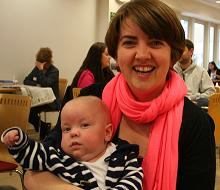
On Saturday 17 November Whittington Health marked World Prematurity Day - an international campaign to raise awareness of the 15 million babies who are born too soon each year and issues they face - by hosting a tea party in the neonatal intensive care unit for premature babies, their families and parent supporters.
In the UK, 60,000 babies are born prematurely every year. Of that number approximately 400 are delivered at the Whittington Hospital. Very premature babies born at the Whittington are admitted to the neonatal intensive care unit as they require complex medical care while they complete their development. Other babies, born near or at full term, may need specialist treatment or breathing support after a difficult birth.
Whittington Babies is a charity that supports families with premature babies at the Whittington. The charity raises funds to purchase equipment and supply additional services to improve the quality of life for sick and premature babies in the unit and their families. Recently, the money raised has purchased moveable breast pumps so mothers can express milk in comfort; ergonomic breastfeeding pillows; books for parents relating to prematurity; and it has furnished overnight rooms at the unit to allow parents to be closer to their baby.
One of the services the charity provides is a Parent Support Group, which is made up of volunteers who have had premature babies. Many parents find this support very helpful at what can be a difficult time. One of the mothers supported by the support group was Lucy Cairncross, who gave birth to her son Edward 24 weeks and four days into her pregnancy. Edward was born at the University College London Hospital weighing just 785 grams (1lb 12ozs) and was given a 50/50 chance of survival. He was transferred to the Whittington at 14 weeks and spent time on the special care baby unit.
Lucy said: “Having a very premature baby is extremely stressful. Initially you worry about whether your baby will survive and then whether they will be left with long term medical conditions. You can’t do all of the things you expect to do as a new mum such as feeding and bathing your baby, which is very upsetting. The support I received from the Whittington Babies volunteers was fantastic. They had all been through similar experiences and really understood how I was feeling. When Edward was well enough they supported me and my husband to feed and change him and gave us the confidence we needed before we brought him home.”
Whittington Babies is always looking for support in the form of volunteers or fundraising. To get involved visit: www.whittington.nhs.uk/whittingtonbabies
Last updated16 Nov 2012