

Whittington midwifery partnership recognised by the Department of Health
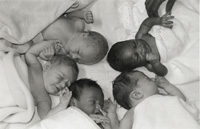 Whittington midwives’ work with mothers in Holloway cited as an example of good practice by the Department of Health.
The Whittington Hospital's maternity department, working with Sure Start Holloway, has beenrecognised as an example of good practice by the Department of Health in its report on reducing infant mortality pubished on 7 February 2007.
The government has set a target to reduce ‘health inequalities’ by 10 per cent by 2010 and one of the key factors in this is reducing the rate of infant mortality in the most deprived communities. The report, ‘Review of the Health Inequalities Infant Mortality PSA Target’, names the Whittington’s One to One Midwifery service as being a practical example of how these problems can best be addressed.
Between 2002 and 2006, six midwives attached to the Whittington were based at Holloway Sure Start centre providing a one-to-one midwifery service. Women from the vulnerable social group served by Sure Start tend to wait until late into their pregnancy to seek help from medical or midwifery services. This means that they are less able to benefit from healthcare that could improve the outcome of their pregnancy for both themselves and their babies.
By giving each mother a named midwife, the Whittington’s service sought to provide continuity of care to mothers who were able to have their antenatal care, delivery and postnatal care overseen by a recognisable face with whom they had built a relationship. This had the effect of improving many of the aspects of healthcare during and after pregnancy that have major ongoing effects on health during adulthood. This way of working requires real flexibility and dedication on the part of the midwives providing the service, since they have to respond to calls at all times of the day or night.
The fact that team of midwives provided an outreach service, visiting mothers at home caused a dramatic drop in non-attendance rates from 20 per cent to 0 per cent. This meant that women were receiving the care they needed when they needed it, which reduced again the likelihood of unforeseen problems throughout their pregnancy.
As a result of the work done by the Whittington team, when comparing 2003 and 2004, the average birth weight of babies had risen, breastfeeding rates at 28 days had risen by four per cent, homebirths were two per cent higher. Epidural anaesthesia rates amongst first time mothers had dropped 19 per cent and dropped by 5 per cent for mothers who had previously had children. As well as being expensive, use of epidural increases the likelihood of medical intervention during labour, as women are less able to feel what is happening.
A qualitative evaluation was also carried out that showed that the service was very popular with mothers, who showed high levels of satisfaction with the one to one care they received.
Whittington Chair, Narendra Makanji said, “This is terrific recognition for our midwifery service. In an area that can be quite worrying for a large number of women who are otherwise perfectly healthy and in which outcomes are generally very happy, it is good to know that should things go wrong, we have a team of experienced qualified midwives available.”