

Hysteroscopy (Outpatients)
Patient Information Leaflet
What is a hysteroscopy?
- A hysteroscopy is a procedure that examines the inside of your womb (uterus).
- We use a small, flexible tube with a camera, called a hysteroscope.
- The tube is inserted through the vagina and into the lower part of the uterus (cervix).
Why are you having a hysteroscopy?
- A hysteroscopy can help us find out what is causing you problems and sometimes treat your gynaecological symptoms by looking inside your womb.
- If you have concerns about this procedure, please contact the Women's Health Department on 020 7288 3118.
Your hysteroscopy appointment
- The hysteroscopy procedure takes around 15 minutes. The entire appointment takes around 1-2 hours.
- The procedure cannot be done if you are pregnant. Use contraception or avoid sex between your last period and the appointment.
- To reduce cramps, take pain relief such as ibuprofen or paracetamol at least one hour before your appointment.
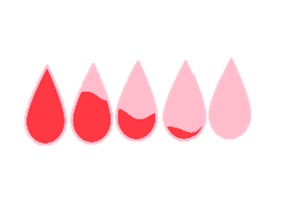
- You can still have the hysteroscopy on your period. If your bleeding is heavy or you want to rearrange on the day of your appointment, please call us on 020 7288 5279.

- You can bring a family member or friend with you for support before and after your procedure.
During your appointment

- Your appointment will begin with a consultation.
- You will need to do a pregnancy test to confirm the procedure can be done safely.
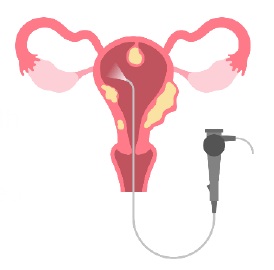
- The first step of the hysteroscopy is to insert a thin tube with 3 a camera through the vagina and the cervix into the womb. Salt water is released into the womb to make it easier to see.
- If you wish, you can watch your procedure on a screen. You may want to close your eyes and relax or listen to music.
- If the procedure is too painful, you can ask to stop at any time.
- We may complete the following procedures during your hysteroscopy:
- Biopsy: we take a sample from the lining of your womb.
- Removal of polyp or fibroid: this is the removal of a non-cancerous or cancerous growth.
- Removal of ROPC (Retained Products of Conception): removing retained tissue from pregnancy.
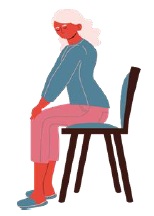
- After the procedure, a quiet space is available for your recovery. Most patients return to the waiting room briefly before going home.
After your hysteroscopy appointment
- You may experience mild cramping and light spotting (small spots of blood). This is normal and should improve in 1-2 days.

- If you experience the following, contact the Women's Diagnostic Unit on 020 7288 3786, attend your local Emergency Department or call 111:
- More bleeding than a heavy period
- Bad-smelling discharge
- High fever
- Stomach pain that doesn't go away.
Immediately following the procedure:

- You can go back to your normal daily activities.
- You can shower.
For 10 days after your procedure or until symptoms have settled:

- You cannot have a bath.
- You cannot go swimming.
- You cannot have sex.
- You cannot use a tampon.
Next steps
- If you had a biopsy during the procedure, you will be sent a letter with the results within three weeks. Your GP will also receive a copy.
- If the results of your biopsy suggest you may need further treatment you will be sent a letter for an appointment with the consultant.
Further information
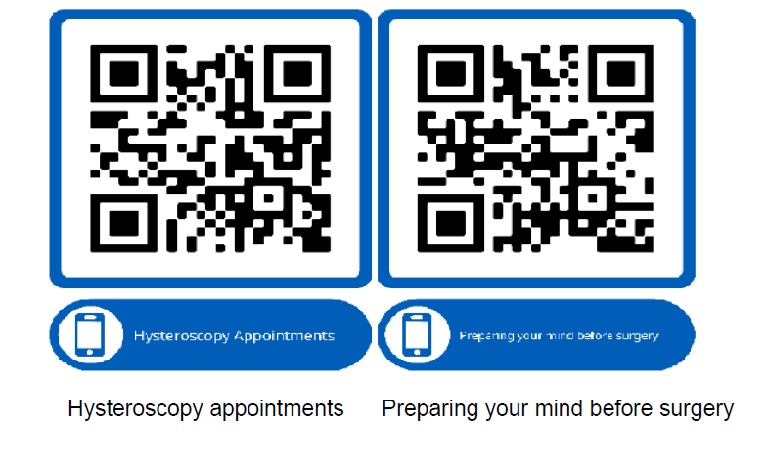
- Please use the link https://vimeo.com/showcase/10324981 or QR codes below to see videos about the hysteroscopy appointment.
- Videos are available in a range of languages.
Contact our service
Women’s Diagnostic Unit: 020 7288 3786.
Published:
10 Apr 2024
Review:
12 Mar 2028
Reference:
ACW/Gynae/OPHysterosc/09