

Postnatal blood pressure monitoring at home
Patient information leaflet
This leaflet helps to answer the following questions:
- How to measure your blood pressure?
- What targets to aim for?
- When to seek urgent medical help?
Why does monitoring matter?
- If you had high blood pressure (hypertension) during pregnancy or birth, this could continue after the baby is born.
- Some people may also develop high blood pressure after birth, despite having had normal blood pressure previously.
- Monitoring your blood pressure at home helps protect your health and reduces the need for hospital visits.
Why is postnatal hypertension dangerous?
- High blood pressure after birth can be just as serious as high blood pressure during pregnancy.
- If left untreated, it can lead to life-threatening complications such as:
- Seizures (eclampsia)
- Stroke
- Heart failure
- Organ damage (particularly to the liver and kidneys)
- Pulmonary oedema (fluid in the lungs).
- These complications can develop quickly and without warning.
- This is why it’s important to continue monitoring your blood pressure even after the baby is born, and to take any symptoms seriously.
Red flag symptoms – Seek emergency help immediately
- If you experience any of the following, call for urgent medical help or go to the hospital right away:
- Severe headache: not improving with simple painkillers, such as paracetamol
- Vision changes: blurred vision, flashing lights, or loss of vision
- Pain in the upper belly area: especially under the ribs on the right side
- Vomiting: more than just mild nausea
- Sudden swelling: in your face, hands, or legs
- Shortness of breath or chest pain
- Feeling generally unwell: in a way that is difficult to explain.
- These symptoms may indicate postnatal pre-eclampsia or other serious complications.
Blood pressure targets and what to do with your readings
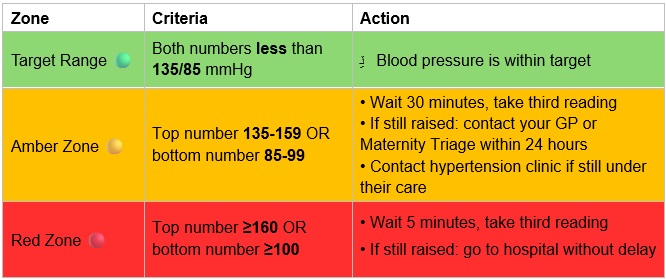
- Important: If your blood pressure stays below 120/70 mmHg for 24 hours, your healthcare team may advise you to gradually reduce your medication.
- Do not stop taking your medication unless you have been told to do so.
Adjusting medication after birth
- If your blood pressure remains well controlled, at or below 120/70 mmHg for 48 hours, you can start tapering your medication.
For Nifedipine:
- Reduce by 10mg per dose (for example, reduce from 20mg twice a day to 10mg twice a day).
- If your blood pressure is still well controlled 48 hours after starting the lower dose, it can be reduced again.
- Once each dose reaches 10 mg, you can reduce the number of daily doses by one dose (for example from three times a day to two times a day then stop).
For Labetalol:
- Reduce by 200 mg per dose. (for example, reduce from 400mg twice a day to 200mg twice a day).
- If your blood pressure is still well controlled 48 hours after starting the lower dose, it can be reduced again.
- Once each dose reaches 200 mg, you can reduce the number of daily doses (for example from three times a day to two times a day then stop).
If you are on two different blood pressure medications:
- Always start by reducing one type of tablet first.
- Once that has been safely stopped, you can begin tapering the second.
Example for Nifedipine: Here’s an example of how to taper if you're currently taking Nifedipine 20mg three times daily:
- Reduce to 10mg three times daily
- After 48 hours, if BP still controlled, reduce to 10mg twice daily
- After 48 hours, if BP still controlled, reduce to 10mg once a day
- After 48 hours, if BP still controlled, stop your medication.
Example for Labetalol: Here’s an example of how to taper if you're currently taking Labetalol 400mg three times daily:
- Reduce to 200mg three times daily
- After 48 hours, if BP still controlled, reduce to 200mg twice daily
- After 48 hours, if BP still controlled, stop your medication.
Low Postnatal Blood Pressure

If your blood pressure falls below 90/50 mmHg or you feel dizzy, faint, or unwell, contact your maternity team without delay.
How to check your blood pressure at home
Follow these steps each time:
- Sit quietly for 5 minutes before taking a reading
- Sit with your back supported and feet flat on the floor
- Rest your arm at chest level on a table or armrest
- Put the cuff on your left arm (unless told otherwise)
- Take the first reading
- Wait one minute
- Take a second reading
- Write down both readings and note any symptoms
- Do this morning and evening
- Do this ideally 1 hour after taking your medication or if you feel any symptoms of high/ low Blood Pressure.
Remember: Always take TWO readings, one minute apart.
How often to monitor
- Morning and evening for the first 7 days after birth.
- Continue daily measurements if your blood pressure remains high or you are still taking medication until you are reviewed by your GP or in the hypertension clinic.
- You should continue checking your blood pressures for an additional 5 days after you stop your medications.
Contact information
Whittington Hospital Maternity Triage (24/7): 020 7288 5880
Address: Whittington Hospital, Magdala Avenue, London, N19 5NF
Website: https://www.whittington.nhs.uk
Maternity Triage is located in Betty Mansell Ward on Level 3 of the Kenwood Wing.
Triage is open 24 hours a day, 7 days a week. It is staffed by experienced Midwives and a specialist Doctor. You don’t need an appointment – you can just turn up.
Hypertension clinic: whh-tr.whitthypertensioninpregnancy@nhs.net
Emergency Advice
- If you feel very unwell, have a blood pressure reading above 160/110 mmHg, or experience red flag symptoms, do not delay:
- Call 999, go to A&E, or contact maternity triage immediately.
Blood Pressure Recording Diary
| Date | Time | Reading 1 | Reading 2 | Symptoms/Notes |
|---|---|---|---|---|
| ____am | _____ / _____ | _____ / _____ | ||
| ____pm | _____ / _____ | _____ / _____ | ||
| ____am | _____ / _____ | _____ / _____ | ||
| ____pm | _____ / _____ | _____ / _____ | ||
| ____am | _____ / _____ | _____ / _____ | ||
| ____pm | _____ / _____ | _____ / _____ | ||
| ____am | _____ / _____ | _____ / _____ | ||
| ____pm | _____ / _____ | _____ / _____ | ||
| ____am | _____ / _____ | _____ / _____ | ||
| ____pm | _____ / _____ | _____ / _____ | ||
| ____am | _____ / _____ | _____ / _____ | ||
| ____pm | _____ / _____ | _____ / _____ | ||
| ____am | _____ / _____ | _____ / _____ | ||
| ____pm | _____ / _____ | _____ / _____ | ||
| ____am | _____ / _____ | _____ / _____ | ||
| ____pm | _____ / _____ | _____ / _____ | ||
| ____am | _____ / _____ | _____ / _____ | ||
| ____pm | _____ / _____ | _____ / _____ | ||
| ____am | _____ / _____ | _____ / _____ | ||
| ____pm | _____ / _____ | _____ / _____ | ||
| ____am | _____ / _____ | _____ / _____ | ||
| ____pm | _____ / _____ | _____ / _____ | ||
| ____am | _____ / _____ | _____ / _____ | ||
| ____pm | _____ / _____ | _____ / _____ | ||
| ____am | _____ / _____ | _____ / _____ | ||
| ____pm | _____ / _____ | _____ / _____ | ||
| ____am | _____ / _____ | _____ / _____ | ||
| ____pm | _____ / _____ | _____ / _____ | ||
| ____am | _____ / _____ | _____ / _____ | ||
| ____pm | _____ / _____ | _____ / _____ |