

Exercise during pregnancy
Patient information factsheet
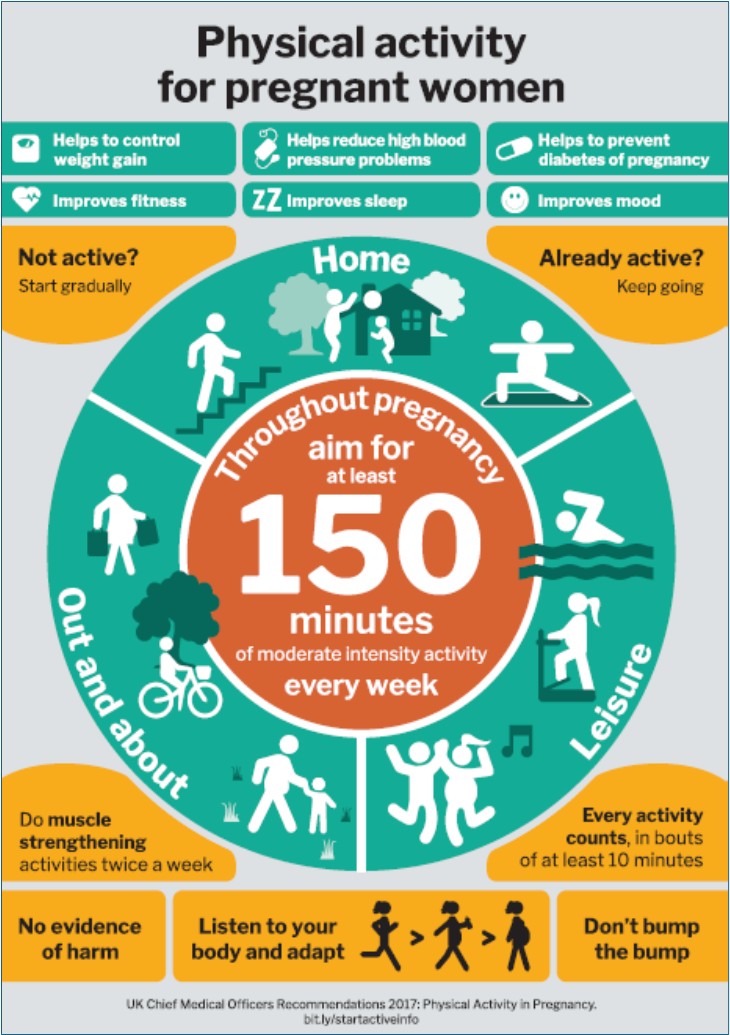
Women are encouraged to start or keep exercising during pregnancy. Exercise can be good for both mum and baby. In most cases, it is safe and helpful during pregnancy.
What are the benefits of exercise?
Regular exercise can:
- Maintain heart and lung fitness
- Help keep a healthy weight
- Improve energy levels
- Help you sleep better
- Reduce stress, anxiety, and low mood
- Improve blood flow around the body
- Lower the risk of varicose veins
- Reduce swelling in hands, feet, and legs
- Keep muscles strong and flexible
- Improve balance and coordination
- Improve posture
- Reduce aches and pains, like low back pain
- Help reduce constipation
- Help prevent and manage pelvic floor problems
- Help prevent and manage gestational diabetes (diabetes in pregnancy)
- Help prevent and manage high blood pressure
- May shorten labour
- May reduce complications during birth
- Help your body recover after birth.
What type of exercise is best?
Most types of exercise are good for you.
Choose something you enjoy and feel comfortable doing.
Try to make it part of your daily routine.
Don’t overdo it, as getting too hot can affect your baby.
Exercise at a safe, medium level.
The recommendation in pregnancy is 150 minutes of moderate exercise each week.
This can be split into 20–30 minutes a day.
Try to include both:
- Aerobic exercise (like brisk walking or swimming)
- Strength exercises (like yoga or Pilates)
If your doctor or healthcare professional has given you special instructions, always follow their advice.
If you have any medical problems, or a BMI over 40, speak to a healthcare professional first. Do this before starting an exercise plan.
Stop exercising and get medical advice if you notice any unusual symptoms.
These include:
- Very strong shortness of breath
- Chest pain or a racing/irregular heartbeat
- Dizziness
- Painful tummy (uterine) contractions
- Pain in your tummy or pelvis
- Vaginal bleeding
- Leaking fluid (water breaking)
- Pain or swelling in your calf
- Baby moving less than normal
- Extreme tiredness
Advice for exercising
- Do not start a new exercise programme before 13 weeks of pregnancy.
- Wear a supportive bra and suitable shoes when exercising.
- If pain makes exercise difficult, try gentle, non-weight bearing exercise like aqua aerobics.
- Always warm up before exercise and cool down afterwards.
- Drink plenty of water.
- Do not get too hot, too out of breath, too tired, or dizzy.
- If you feel pain or discomfort, stop or change position.
- Avoid contact sports and high-impact exercises.
Pelvic floor exercises
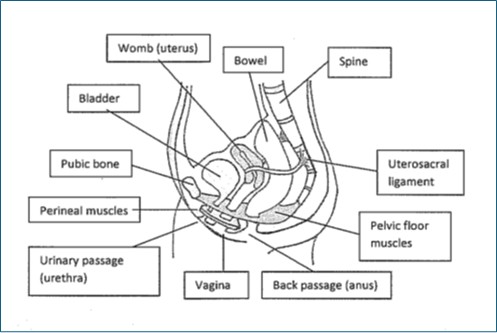
- The pelvic floor is a group of muscles that act like a sling or hammock across your pelvis.
- They run from the front to the back of your pelvis.
- They support your bladder, womb (uterus), bowel, lower back, and pelvic joints.
- These muscles help close the bladder, vagina, and back passage (anus).
- They also help support and position your baby during labour.
- As your baby grows and during birth, your pelvic floor muscles can become weaker.
- Problems with pelvic floor muscles (like trouble controlling pee or poo) are more common during pregnancy and after birth.
- Exercising these muscles can help prevent and treat these problems.
- Do the exercises while breathing normally and keeping your tummy relaxed.
- You can do the exercises in any position.
- Supported positions (sitting or laying down) are easier, while standing or moving makes them harder.
- Tighten and lift your pelvic floor muscles
- Close and draw up the muscles around your back passage, vagina, and urethra (urine tube).
- Imagine you are stopping wind, squeezing your vaginal walls together, and stopping urine at the same time.
- Your pelvic floor should lift upwards and forwards, towards your pubic bone.
There are two pelvic floor exercises:
Slow holds
- Tighten and lift your pelvic floor muscles
- Hold for up to 10 seconds
- Then relax
- Repeat 10 times
Quick squeezes
- Quickly tighten and lift your pelvic floor muscles
- Then fully relax
- Repeat 10 times
- Do these exercises 4 - 6 times a day.
- It may take about 2 months to notice improvement.
- It can take up to 6 months to see full benefits.
Protect yourself
- Tighten and lift your pelvic floor muscles before you cough, sneeze, or strain.
- When walking for a long time, gently (about half strength) tighten your pelvic floor muscles.
Deep abdominal (transversus abdominus) muscle exercises
- The transversus abdominus muscle is a deep muscle that wraps around your stomach like a corset.
- It connects with your back muscles to support your baby, back, and pelvis.
- As your baby grows, your stomach muscles stretch and become weaker, but you can safely exercise the deep muscles to improve your support.
- Do not do sit-ups until six weeks after giving birth.
- Strengthening this muscle can help prevent and reduce low back pain and pelvic pain, which are common in pregnancy.
- It can help to reduce too much stretching of the stomach muscles.
- It can help your stomach recover and improve your its shape after giving birth.
- It is also an important muscle used when pushing during labour.
- Do this exercise while breathing normally and keeping your stomach relaxed.
- You can do it in any position. Lying on your side is easier, while standing up or moving around is harder.
- Draw in your deep stomach muscles, below the belly button, as if trying to tuck in your lower stomach to fit into a belt or tight trousers.
- Check in a mirror - your belly button should move directly back towards your spine or downwards (not upwards).
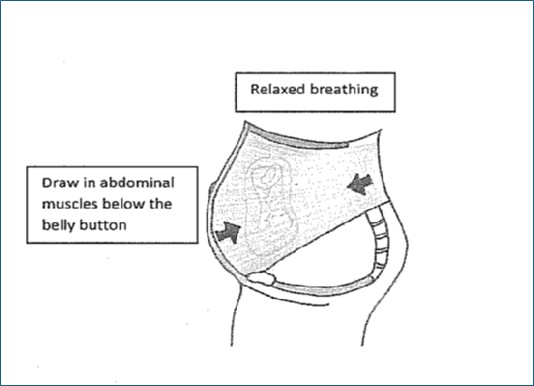
Deep abdominal exercise:
Gently draw in your stomach muscle for up to 10 seconds, then relax. Repeat 10 times.
You should complete this exercise four to six times a day.
It may take two months to notice any benefit and up to six months to see real improvement.
Protect your back
- Tighten your deep stomach muscles before lifting, pushing or pulling.
- Tighten your deep stomach muscles when standing still for a length of time.
Resources
Pelvic, Obstetric & Gynaecological Physiotherapy (POGP>
Provides evidence-based patient information which may be recited (audio) in many languages. Website: https://www.thepogp.co.uk/patient_information/default.aspx
Royal College of Obstetricians and Gynaecologists (RCOG)
For patient information and leaflets on many topics including exercise. Website: https://www.rcog.org.uk
(Illustrations courtesy of Robyn Pathmanandam, Whittington Health NHS Trust)
Contact our service
Whittington Bladder and Bowel Care Service
Email: whh-tr.bladderandbowel@nhs.net
Webpage: https://www.whittington.nhs.uk/?c=33288
Whittington Pelvic Health Physiotherapy
Email: whh-tr.outpatienttherapy@nhs.net
Webpage: https://www.whittington.nhs.uk/?c=42977
North central London perinatal pelvic health service - Royal Free London
Email: rf-tr.nclpphs@nhs.net
Webpage: https://www.royalfree.nhs.uk/services/maternity-services/maternity-support/north-central-london-perinatal-pelvic-health-service