

Staff Testimonials
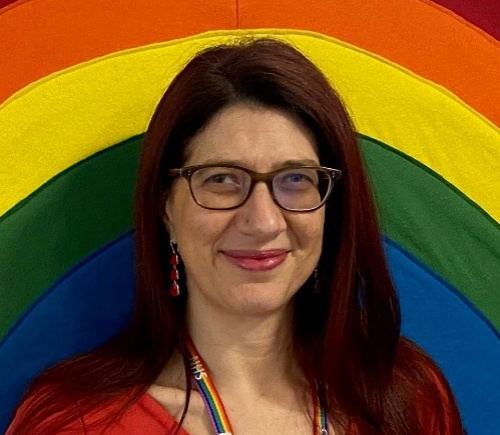
Sarah Batehup
Allied Health Professional Clinical Lead in the MACC Team
Yet to quote!
Levelling the Playing Field – The Importance of Reasonable Adjustments
Sarah Batehup, Allied Health Professional Clinical Lead in the MACC Team and is registered legally blind. Sarah was recently awarded the Trust’s Extra Mile Award and nominated for Educator of the Year, featuring as a case study by NHS England for UK Disability History Month. Sarah explains why it is important challenges around health and employment are discussed openly.
“I've been at the Whittington for 14 years after working in various physio roles. Whittington feels like home, as it has a strong connection with blind/visually impaired physios, due to the specialised training school that trained them from 1970 to mid-1990’s.
Initially wanting to work in elderly acute care, I was recruited into a community rotational post. Despite my initial doubts about community settings, travel and unfamiliar environments (assuming they would be barriers), I enjoyed it, I had time to spend with patients delivering holistic care. This experience led to my current role, which I was encouraged to apply for due to my holistic approach.
I’ve had my disability all my life, I’ve adopted several strategies, when I was a student, I used to say to people if I’m not doing something properly or well it’s not because I have a visual impairment it’s because I’m learning and need to be taught. If after a while there is still a problem, it might be because I’m struggling visually, or I am just not very good at it, do not assume that because I have a disability that is why I cannot do something!
I am outspoken and not afraid to ask for the adjustments I need, I knew what I was entitled to and got my Access to Work assessment done quickly. It’s important that people struggling with their health speak with their managers to ask for help or adjustments if they are struggling, as their managers are not mind readers!
However, I am not always going to know what reasonable adjustments I need when starting a new role. I need to spend some time working in it to understand the realities and the requirements of the new role.
As a person with visual impairments there are several adjustments that have helped me, including:
- Familiarisation with new environments and colleagues, enabling me to be comfortable and focus on the role and not where toilets are etc.
- Utilising inbuilt accessibility features to make my computer more accessible, without the need of additional software.
- I have a dedicated desk at work, which other people can use if I am not there.
- My colleagues send me documents via email instead of paper documents.
- On joint visits, the person accompanying me will alert me of any potential hazards; also, I find it difficult to recognise people’s facial expressions and the accompanying person can alert me.
My team is very diverse and there is a strong focus on inclusion and wellbeing, this helps to create a non-judgemental environment where those with disabilities feel more comfortable to be open about their situation and needs.
When discussing reasonable adjustments and health issues, there is a joint responsibility between the member of staff and their manager. The staff member needs to be as open as possible about their challenges, and their manager needs to be compassionate and open to seeking solutions and providing support on an ongoing basis.”

Last updated15 Jul 2026