

Perineal Protection - A patients guide
Patient information guide
This guide explains the options available to you during labour to help protect your perineum.
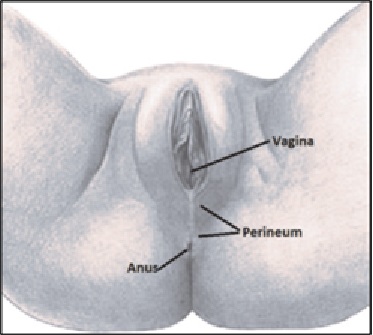
What is the perineum?
- The perineum is the area of skin and muscle between the vagina and the anus.
- It stretches during birth to allow the baby’s head to come out.
- This stretching can sometimes cause tears which can be painful after birth.
Warm compress
- A warm cloth placed on your perineum during the pushing stage of labour, just before you give birth, may help lower the chance of tearing.
- It can feel soothing and comfortable.
- If you would like this, bring a flannel so the midwife can make a warm pack for you during labour.
Hands on support during labour
- Your midwife may protect your perineum by supporting the baby’s head with their hand and advise you when to stop pushing and just breathe.
- This is to let the baby’s head deliver very slowly.
Positions in labour
- It is important to try different positions during labour. You should see what feels best for you.
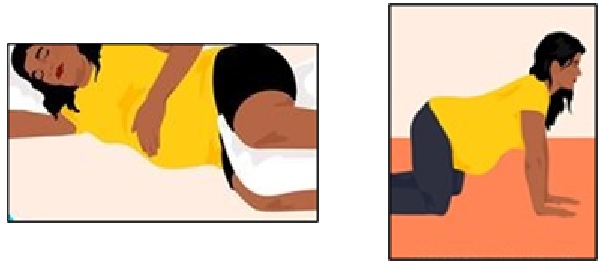
- Upright positions like standing, being on all fours, or using a birthing stool can help your baby move down by using gravity. You may also need to rest at times.
- Lying on your left side is a good resting position. It helps create space in your pelvis for the baby to move down.
- When pushing, good positions include being on all fours, semi-sitting, or lying on your left side with your top leg raised to help open the pelvis.
Episiotomy
- An episiotomy is a cut in the skin between the vagina and anus – the perineum.
- Midwives and doctors will usually try to avoid an episiotomy.
- However, in some situations, it may be needed during childbirth.
- For example, your baby shows signs of distress on the heart rate monitor and must be delivered quickly.
- After the birth, the cut is stitched and usually heals over time.
- Alternatively, you may need an instrumental birth, using forceps or a ventouse (a suction cup), to help prevent a large tear.
Contact our service
Whittington Bladder and Bowel Care Service
Email: whh-tr.bladderandbowel@nhs.net
Webpage: https://www.whittington.nhs.uk/?c=33288
Whittington Pelvic Health Physiotherapy
Email: whh-tr.outpatienttherapy@nhs.net
Webpage: https://www.whittington.nhs.uk/?c=42977
North central London perinatal pelvic health service - Royal Free London
Email: rf-tr.nclpphs@nhs.net
Webpage: https://www.royalfree.nhs.uk/services/maternity-services/maternity-support/north-central-london-perinatal-pelvic-health-service
Published:
17 Jun 2026
Review:
17 Jun 2028
Reference:
EIM/PelvPhysio/PerProt/02