
Healthy eating in pregnancy after bariatric surgery (NLOSS)
Patient information factsheet
North London Obesity Surgery Service (NLOSS)
Introduction
Congratulations on your pregnancy!
- It is recommended that if you become pregnant after bariatric surgery, you are monitored once every trimester by the bariatric team.
- Healthy eating during pregnancy will help your baby grow and develop. It will help your body cope with the changes taking place.
- However, there are a few food safety things to remember. You should also follow the advice you were given about healthy eating after bariatric surgery.
- Also, your food supplements need to be checked. Not all multivitamins are safe in pregnancy because some have too much vitamin A.
Food safety considerations in pregnancy
- Do not have any unpasteurised food and drink. ‘Unpasteurised’ means food or drink that has not been heat-treated to kill harmful germs, for example raw milk.
- Avoid raw fish and shellfish, for example oysters, sushi and sashimi.
- Seafood e.g., prawns, squid, mussels, are fine to eat but they must be thoroughly cooked/reheated.
- Smoked salmon is fine to eat, buy prepacked and use within the package guidelines.
- Shark, marlin and swordfish should not be eaten as they contain high levels of mercury.
- Fresh tuna once a week OR two small tins of tuna a week are safe to eat.
- Keep hot food hot and if you are reheating leftovers make sure it has reached 74 degrees celsius (165 Fahrenheit).
Food safety
Listeria
Listeria is a type of germ (bacteria). It can cause a mild flu-like illness in the mother. But it can be much more serious for a baby. It may cause miscarriage or make a newborn very ill.
- Do not eat unpasteurised soft ripened cheeses such as Camembert, Brie and the chevre varieties, unless cooked steaming hot.
- Pasteurised hard cheese, cream cheese, cottage cheese, cheese spread, fromage frais and yoghurts are all safe to eat.
- Wash thoroughly all bought salads/vegetables.
- Cook/heat ready meals until piping hot.
Toxoplasmosis
Toxoplasmosis can seriously harm an unborn baby. It is caused by a germ called toxoplasma. This is often found in raw meat and cat litter.
You must:
- Wash your hands after handling raw meat.
- Cook meat thoroughly especially things like sausage and mince.
- Wash thoroughly salads and vegetables.
- Do not eat/drink unpasteurised milk and cheese.
- Always wear rubber gloves when emptying cat litter and gardening.
- With cured meats, e.g. parma/serano ham caution is advised.
Salmonella
Salmonella is a common cause of food poisoning. It does not harm the baby but can be very unpleasant for you.
You are advised to:
- Cook eggs well and avoid mayonnaise, mousse, etc made with raw eggs.
- Shop bought mayonnaise and salad creams are pasteurised. They are safe to eat.
Protein requirements
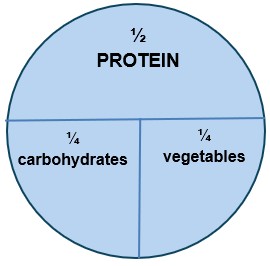
- Getting enough protein is still very important during pregnancy after bariatric surgery. But remember to follow food safety advice too.
- Aim for 60-80g per day from a variety of foods.
Here are some examples of good sources of protein:
| Dairy | High protein yogurts Skim milk in cereal or hot drinks Low fat cheese |
| Eggs | Scrambled, omelette, hard boiled |
| Pulses | Lentils, beans, chickpeas, edamame |
| Meat | Chicken, beef, lamb, pork |
| Fish | Canned fish e.g. tuna, sardines, pilchards, salmon, white fish |
| Vegetarian | Tofu, tempeh, Quorn cutlets |
Supplements in pregnancy
Vitamins and minerals
- After bariatric surgery, your body does not take in (absorb) and use nutrients the same way as before.
- Therefore, to get all the vitamins and minerals your body needs, you will need to continue to take daily vitamin and mineral supplements for life.
- Remember to change your regular multivitamin to a pregnancy safe option, and take 2 per day. Suitable options:
- Seven Seas Pregnancy
- Pregnacare
- Centrum Pregnancy Care.
- Also remember to take the following:
- Chewable Calcium & vitamin D – 1200-1500mg elemental calcium & 800IU vitamin D per day, such as Adcal D3 (twice daily) or Calcichew (twice daily)
- Additional 2000IU of vitamin D, for example Pro D3
- 45-60mg of elemental iron
- B12 injections (3 monthly)
- 5mg Folic Acid
Vitamin A
- Vitamin A in the retinol form is teratogenic, which means it can be harmful to your baby.
- Avoid retinol form of Vitamin A.
- From supplements
- Liver & liver products
- Cod liver oil
- Increase beta carotene form of Vitamin A.
- Fruits & vegetables
Common problems in pregnancy
Morning sickness
- This is very common in the first trimester of pregnancy and is due to hormonal and metabolic changes. For some people it can continue through the whole pregnancy.
- It can occur at any time during the day, and different people cope with this in different ways.
- The following may help:
- Small, frequent meals based on starchy foods e.g. bread, toast, crisp bread, banana, breakfast cereals.
- Sip small amounts of fluid throughout the day.
- Try ginger or peppermint tea.
Cravings and taste changes
- Many women experience taste changes and/or crave unusual food items.
- If you start craving non-food items, please tell your Doctor.
- If you crave high fat or high sugar foods, you could experience something called ‘dumping syndrome’.
- This is when food moves too quickly into your gut and can make you feel very unwell. You might feel sick, dizzy, sweaty, or get stomach cramps.
Constipation
- This is very common throughout pregnancy.
- Eat foods rich in fibre i.e. wholemeal bread, wholegrain cereals, wholemeal flour, brown rice and whole-wheat pasta.
- Fruit and vegetables as well as beans and pulses are also good sources.
- Try to have at least 8 to 10 cups of fluids per day.
- Iron supplements can worsen constipation, so talk to your Doctor about changing your prescription if needed.
Heartburn
- This usually happens in the last trimester of pregnancy. It happens because pressure from the growing baby in your uterus (womb) can cause acid to be pushed back up from your stomach.
- You may find the following suggestions helpful:
- Eat small, frequent meals.
- Sit up straight when eating and avoid lying down after a meal for 1 to 2 hours.
- At night, sleep propped up by extra pillows.
- Avoid foods that upset you, these commonly include spicy and fatty foods, fizzy drinks and citrus fruits.
- Low fat milk and milk products may help neutralise the acid.
Weight gain in pregnancy
- When you are pregnant your weight increases due to:
- the baby being formed
- the placenta growing
- your increased blood volume
- fat stores and extra tissue made in the breasts and uterus.
- The specific amount of recommended weight gain will be based on your BMI.
- Please discuss your specific weight goals with your Dietitian during your review.
- Your baby only weighs a few pounds. Therefore, you only need 200 calories on top of what you normally eat in the last trimester.
- This is equivalent to any of the following:
- A low fat yoghurt and a banana
- 2 pieces of toast
- 2 biscuits or 2 crackers with cheddar
- A small bar of chocolate or a small packet of crisps
Exercise
You should try to keep active on a daily basis.
You could try:
- Walking for 30 minutes daily
- Water aerobics
- Swimming
- Pregnancy yoga.
It is important that you talk to your doctor before you start exercising. Especially if you were not exercising regularly before the start of the pregnancy.
Caffeine
- In large amounts it can cause irritability, nervousness and insomnia and can dehydrate you.
- It may also cause your baby to be born with a low body weight.
- It is recommended that you keep your caffeine intake below 200mg per day.
| Beverage (per one cup) | Caffeine content |
|---|---|
| Coffee | 90-140mg |
| Tea (Green or Black) | 20-5mg |
| Hot Chocolate | 15-20mg |
| Decaf coffee | 3mg |
Monitoring
- You will have regular monitoring with your antenatal team and your bariatric team.
- Please make your antenatal team aware that an Oral Glucose Tolerance Test (OGTT) for Gestational Diabetes may result in Dumping Syndrome or Reactive Hypoglycaemia.
- The Bariatrics Service encourages patients to advocated for themselves and to remind other services they see that they have had bariatric surgery.
Further reading
For further information on the foods to avoid in pregnancy, please see https://www.nhs.uk/pregnancy/keeping-well/foods-to-avoid
Contact our service
Should you need more information, please contact our Specialist Bariatric Dietitians on 0207 288 5989, Monday to Friday, 8am to 4pm.