

Back Pain
Patient information Leaflet
- Back pain is a very common problem, and most of us will have it at some time in our lives.
- It may be due to a simple muscle strain or there may not be a specific cause.
- Back pain is not often a sign of something serious.
- In most cases back pain gets better after a few weeks. If it does return, it is unlikely to be an ongoing problem.
- Continue with your normal everyday activities and routine as soon as you can and keep moving.
- Being active and exercising won't do you any harm.
- Even if you have a bit of pain and discomfort, it doesn't mean you are doing any damage to your back.
- Staying active and moving will help you get better quicker.
- Taking painkillers regularly for a few days can help you stay active.
- Not moving is likely to make your back pain worse or last longer.
Causes of back pain
- Back pain can have many causes. It's not always obvious what causes it, and it often gets better on its own.
- A common cause of back pain is an injury like a pulled muscle (strain).
- Sometimes, medical conditions like a slipped disc, sciatica (a trapped nerve) or ankylosing spondylitis (a type of arthritis that causes inflammation in the joints and ligaments of the spine) can cause back pain.
- Very rarely, back pain can be a sign of a serious problem such as a broken bone, cancer or an infection.
- Ask for an urgent appointment with your GP or call 111 if you have back pain and:
- a high temperature
- you've lost weight without trying
- there's a lump or swelling in your back or your back has changed shape
- the pain does not improve after resting or is worse at night
- the pain is made worse when sneezing, coughing or pooing
- the pain is coming from the top of your back (between your shoulders), rather than your lower back.
What are the warning signs of a serious problem?
- Very rarely back pain or pain that travels down the legs is a sign of a serious problem.
- If you have any of the following symptoms, you should seek urgent medical attention:
- difficulty controlling or passing pee (urine)
- loss of control of your bowels
- numbness around your back passage or your genitals
- weakness in your legs so you find standing difficult
- severe and ongoing back pain that gets worse over several weeks
- changes in sexual function, for example, men being unable to get an erection.
- The symptoms listed above could potentially be linked to a rare but serious condition called cauda equina syndrome.
- This involves the nerves at the base of the spine being pressed on or squeezed.
- You should speak to your GP the same day your symptoms start or go to your nearest Emergency department (ED).
How to ease back pain yourself
- The most important things to do are to keep moving, continue with everyday activities and have a healthy lifestyle.
- Research suggests that your emotional response to back pain has an impact on how quickly you get better. The more positive you are, and the more active you are, the quicker your back will improve.
- Remember, if you are ever struggling, don't suffer in silence, talk to a healthcare professional, such as a GP or Physiotherapist.
- There are things you can do to help speed up your recovery:
- stay active and try to continue with your daily activities.
- take anti-inflammatory medicine like ibuprofen if suitable for you.
- use an ice pack (or bag of frozen peas) wrapped in a tea towel to reduce pain and swelling.
- use a heat pack (or hot water bottle) wrapped in a tea towel to relieve joint stiffness or muscle spasms.
- try doing some exercises and stretches for back pain.
- do not stay in bed for long periods of time.
Why is it important to keep moving if I have back pain?
Keeping the muscles around the spine strong will provide more support to the bones and joints and take pressure off them.
Some people worry that if they have back pain, doing certain activities such as lifting things, twisting and turning might make their pain worse.
It is important to remember that our backs and our spines are very strong and are designed to move.
If you stop being active for a long time, the muscles in your back become weak and you become less fit, and this can make your back pain worse.
Regular exercise leads to shorter and less frequent episodes of back pain.
It also releases chemicals called endorphins, which are the body's natural painkillers. These improve pain and make you feel happier.
Exercise might make your back feel a bit sore at first, but it doesn't cause any harm - so don't let it put you off.
Taking some painkillers before you exercise can help.
It's better to choose a form of exercise you enjoy as you are more likely to stick to it.
There are many forms of exercise that have helped people with back pain. Examples include:
- swimming
- walking
- yoga
- Pilates
- going to the gym.
While you can push yourself and build up to do harder exercise, it's important not to overdo it.
If you are in pain, that you cannot cope with, during or after your activity, you'll need to see a doctor.
The key is to start off gently and to gradually increase the amount you do.
Often people stop exercising once their back pain has cleared up.
- If you stop exercising, all the improvements you have made will disappear within a few weeks. -- It is important that you continue to exercise regularly and don't stop when the pain is gone.
If you are having any trouble exercising, it can be a good idea to see a GP or ask for a referral to a Physiotherapist for specific exercise advice for you.
If you are a member of a gym, there may be personal trainers there who can give you expert advice. Make sure you tell them about your condition.
How are back problems diagnosed?
- National guidelines suggest that Doctors should use a common-sense 'wait and see' approach when diagnosing back pain before deciding if you need further treatment.
- This is because most cases of back pain improve by themselves within a week or two.
- As a patient this approach can sometimes be frustrating, but you may find that if you keep up your self-help measures, you will not need further treatment anyway.
- Should you need further treatment, your GP will be able to assess your back pain by discussing your symptoms with you.
- Most problems can be diagnosed after an examination, and it is unlikely that any special tests will be needed.
What tests are there?
- You may be sent for tests if:
- you have had an injury to your back, for example a bad fall.
- your Doctor suspects that there may be an underlying cause for your pain.
- pain has lasted for an unusually long time.
- In this case a magnetic resonance imaging (MRI) scan or computerised tomography (CT) scan may be needed.
- X-rays are much less commonly used because back pain is often caused by problems with soft tissues, such as ligaments and muscles, which can't be seen on x-rays.
- Remember that sometimes even after a thorough investigation, it might not be possible to say for certain what is causing your back pain.
Living with back pain
- Most people will feel better from back pain in about six to eight weeks. Some people might have back pain come back more than once, and for some, it can last a long time.
- Stress, anxiety, and low mood can make existing back pain worse.
- Simple relaxation techniques are an effective way of managing pain.
- It is important to aim for seven to eight hours of sleep at night, as research suggests it reduces stress and improves your overall feeling of well-being.
- Staying at work or going back to work soon can help you get better faster.
Exercises you can try
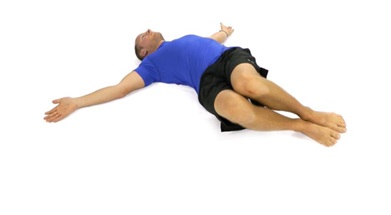
- Lie on your back with your knees bent and your feet on the floor (crook lying).
- Place your arms out to the side for stability.
- Slowly lower your legs to one side until you feel a gentle stretch.
- Return to the central position and repeat.
- Keep your knees together during the movement.
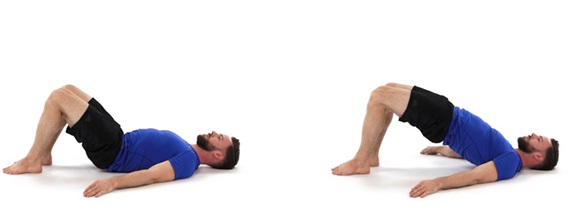
- Start by laying on your back with your knees bent.
- Lift yourself up, peeling one vertebra at a time until your thighs are on a straight line with your torso.
- Lower yourself on the floor doing the reverse motion of putting down one vertebra on the ground at a time.
- Do not lift the head off the floor.
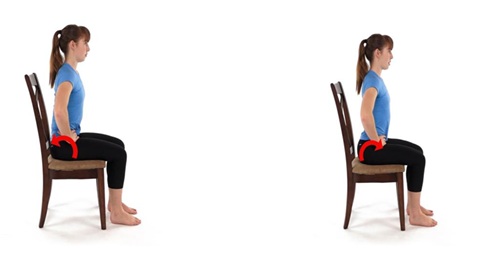
- Sit on a chair with your feet flat on the floor and your back in a neutral position (slightly arched).
- Maintain steady abdominal (stomach) breathing while you tilt your hips forward by rounding your lower back and backwards by arching your lower back.
Alternate between these motions, working through all the available range of motion.
More information
NHS.uk: https://www.nhs.uk/conditions/back-pain/
Contact us
Musculoskeletal Clinical Assessment and Treatment Service (MSK CATS) and Physiotherapy Services
Tel.: 0207 288 3317
Email: whh-tr.mskinterfaceservice@nhs.net