

Hip pain
Patient Information Leaflet
How does the hip joint work?
- Your hip joint is very stable and strong.
- It is called a ball-and-socket joint because the top of your thigh bone looks like a ball. This ball fits into a cup-shaped socket in your pelvis (see Figure 1).
- Ball-and-socket joints give the most movement of all the different types of joints in the body.
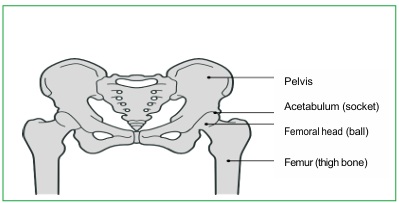 Figure 1. The hip joint
- The hip joint is held together by muscles and tendons that make a strong cover called a capsule. This helps the joint move and stay steady.
- These muscles and tendons help you move your leg and support your upper body.
- Inside the capsule is something called the synovium. It makes a slippery liquid called synovial fluid that keeps the joint smooth and healthy.
- There is also cartilage between the bones in your hip. Cartilage is a smooth tissue that stops the bones from rubbing and helps absorb shock when you walk or move.
- Because of all this protection, it's very rare for the hip to pop out of place, even if you get hurt badly.
What causes hip pain?
- Most of the time, hip pain happens for a simple reason, like if you've done too much exercise.
- When this happens, your pain is usually because the soft parts like tendons (strong cords that connect your muscles to the bones) are stretched or sore. The pain usually goes away after a few days.
- Hip pain that lasts a long time is usually because of a specific condition.
- If you have a problem with your hip joint, you might feel pain in your groin, the front of your leg, and sometimes even in your knee.
- Sometimes, the only sign of a hip problem is pain in the knee. This is called "referred pain" and is common.
- Hip pain can also be felt on the outside of your hip or in your bottom. But pain in those places can also come from problems in your lower back. (Figure 2).
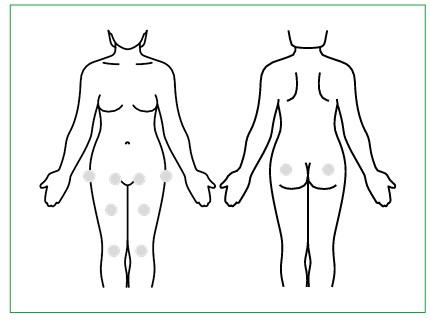 Figure 2. Areas where pain caused by a hip problem may be felt
Should I see a Doctor?
- Most cases of hip pain get better or with simple things you can do at home. But if the pain is really bad or hasn't gotten better after two weeks of taking medicine, you should see your Doctor.
- You should see your Doctor straight away if:
- you've had a fall or injured your hip
- the pain is getting worse
- you're having difficulty with daily activities, for example walking, going up stairs or leaning forwards when sitting
- you feel feverish or unwell, or you've been losing weight.
What can I do to help myself?
Painkillers
- Simple medicines like paracetamol or ibuprofen (in tablets or creams) can help with hip pain. You can buy them at a pharmacy or supermarket.
- You should take the medicine as often as it says on the box. Do not take more than the recommended dose.
- If the pain doesn't get better after two weeks, talk to your Doctor.
- If they help but the pain returns when you stop taking them, you could try another short course.
- You can try rubbing anti-inflammatory creams or Ibuprofen gels onto painful areas, but some hip problems are so deep within the joint that this may not help.
- A pharmacist can help you make the right choice. Ask their advice.
- Always read the medication information inside the box to make sure it's right for you.
Exercise
- Your hip might feel better after a few days of rest, and the pain might be going away. It is important to do some light exercise. This helps keep your muscles strong and your hip from getting stiff.
- There are some simple hip exercises at the end of this leaflet to help you get started.
- Not all exercises work for every kind of hip pain, so it's best to ask a Doctor, Physiotherapist, or gym trainer before you begin. Start slowly and build up little by little.
- It's normal to feel a bit sore or achy in your muscles after exercising, but if your joint starts to hurt and doesn't stop, you should stop and rest.
- As well as doing special hip exercises, it's also good to stay fit in general.
- Going for a walk every day or swimming can help keep your whole body strong and take some pressure off your hip.
- Often people stop exercising once their pain clears up and the pain comes back quite quickly. You must keep exercising, even if you are feeling better, to stop the pain coming back.
Reducing the strain
Keep doing your usual activities but don't do too much at once. Take your time and slowly do a little more each day.
Here are some ways that you can do your daily activities slightly differently, so you don't hurt your hip:
- Don't sit in low chairs as this bends the hip more.
- Don't carry heavy weights. When you are shopping, use a trolley.
- Make sure that you are sitting comfortably at work.
- Your workplace might be able to provide a footrest, back support or other equipment to help you. You could ask for a workstation assessment and talk about your condition.
- Talk to your line manager or Human Resources department about any areas of your job that you are having difficulties with, due to your hip pain.
- Ask an Occupational Therapist or your GP about using a walking stick. They can advise you on the correct length and the best way to use the stick.
- Lose weight if you're overweight - your hip carries a lot of weight, so losing weight will help.
- Avoid standing on one leg - for example, when you get into a car, sit on the side of the seat and swing both legs in rather than stepping in one leg at a time.
Complementary therapies
- There are several complementary treatments that some people find useful to relieve their pain.
- Sometimes they are available on the NHS, such as acupuncture.
- Usually, complementary treatments are quite safe. But you should always talk to your Doctor before trying them, to make sure they don't cause problems with other treatments/medications you might be taking.
- Before you start any complementary treatment, make sure the person helping you follows a code of ethics, is officially registered and has insurance.
How are hip problems diagnosed?
- If your hip pain hasn't improved after two weeks you should see your GP.
- It's a good idea to make some notes about your condition before you go, so you can be sure to discuss everything that's bothering you.
- Your Doctor will ask about your pain and what movements make it feel worse.
- They will ask how your symptoms started, how they affect your daily activities and whether you are in pain at night.
- Pain when you bend your hip going up or down the stairs or when you put on your socks is often a sign of a hip problem.
- They will examine your hip to find out how well it moves, and this will usually give them enough information to plan your treatment.
- You may need other tests to diagnose some conditions.
What tests are there?
X-rays
- X-rays are often the best way of finding out what's wrong with your hip as they show the condition of the bones.
- They may also show problems in your pelvis which could explain your pain.
- They are not as useful for looking at the soft tissues around the joint.
CT scans
- A computerised tomography (CT) scan can often be very helpful to work out if the hip joint has an unusual shape.
- There are conditions where the socket of the hip can be very shallow, and a CT scan can show this.
MRI scans
- Magnetic resonance imaging (MRI) scans show the muscles and tendons around the hip.
- They are particularly helpful for diagnosing avascular necrosis (see section 'Specific hip conditions').
Blood tests
- If your Doctor thinks your pain is caused by an infection or rheumatoid arthritis, blood tests can help.
Specific hip conditions
Osteoarthritis
- Osteoarthritis is one of the most common causes of hip pain in adults.
- It is often due to previous fractures, trauma or childhood hip problems. Though it can also occur without this history.
- Osteoarthritis in the hip can cause a lot of pain. It can make it hard to move your leg and might make you walk with a limp.
- In very serious cases, the leg might get a bit shorter, and the hip can get stuck in a bent position, which makes walking or moving even harder.
Paget's disease of bone
- Paget's disease changes the way bones grow and heal.
- It can make bones weaker. It often happens in the pelvis (the bone near your hips) and can make it change shape.
- This can cause pain in the hip, but there is medicine called bisphosphonates that can help treat it.
Other types of arthritis
- Rheumatoid arthritis, psoriatic arthritis, and ankylosing spondylitis can also make your hips hurt.
- There are specialist medications for each of these that can help with the pain.
Hip fractures
- If you have fallen and hurt your hip you should see your Doctor urgently.
- Fractures around the hip are very common, particularly in elderly people with osteoporosis.
- You may need surgery to fix the damage.
Avascular necrosis (osteonecrosis)
- Avascular necrosis is a condition that causes hip pain in young-to- middle- aged adults.
- It occurs in the hip when the blood supply to the ball at the end of the thigh bone is lost.
- This could be a permanent or temporary loss of blood flow.
- Sometimes steroid treatment, for illnesses like cancer or asthma, can cause avascular necrosis as a side effect.
- You could also have a bad fracture that affects the flow of blood to the end of the bone.
- This loss of blood flow causes the bone and the tissue around it to gradually die - changing the shape of the ball at the end of the bone and making your hip painful and stiff.
- This can cause the ball in the joint to collapse, which results in arthritis.
- It is often referred to as idiopathic, which means that it doesn't have any clear cause. However, it is linked with the following:
- drinking too much alcohol
- using steroids
- sickle cell disease
- radiotherapy.
- If your Doctor thinks you have avascular necrosis, it is important they refer you for an urgent MRI scan to confirm the diagnosis.
- As soon as you have a diagnosis, you can start treatment, which may stop the condition causing any more damage and stop you developing arthritis.
Femoroacetabular Impingement (FAI)
- Femoroacetabular impingement (FAI), is a condition where the ball and socket do not move freely through their normal range of movement.
- This may be because the top of the ball isn't completely round or because the socket is too deep.
- It is not fully understood why this happens, and in most cases no specific treatment is needed.
- In some cases, surgery can improve the range of movement in the hip, but it is not clear whether this helps prevent arthritis developing in the long term.
- If x-rays and scans of the hip joint are normal, then the symptoms may be caused by referred pain from the back.
- Referred pain means you feel pain in one part of your body, but the problem is actually in a different place.
- Pain caused by a problem with the lower back may only be felt in the buttocks, down the back of the legs, over the outer side of the hip joint and occasionally in the front of the hip.
Soft tissue conditions - Lateral hip pain
Trochanteric bursitis
- Bursae are small, soft pouches filled with fluid.
- They work like little cushions to stop parts of your body from rubbing too much when you move - like when tendons or ligaments slide over bones.
- If the bony part on the side of your hip feels painful when you touch it, you might have something called trochanteric bursitis. This happens when a bursae near the top of your thigh bone gets swollen and irritated (inflammation). (see Figure 3).
- It is a very common condition, and there is usually no obvious cause.
- You may feel pain over this bony point, but it can spread down the leg or it may seem to be coming from the hip joint itself.
- Trochanteric bursitis usually only affects one hip, but it can occur in both. It usually improves with rest, painkillers and physiotherapy.
- Very occasionally the condition can last for longer than expected and is sometimes linked to problems with the area of the lower back known as the lumbar spine.
- Paying attention to your posture can make a big difference.
Greater trochanter pain syndrome
- Your pain may not just be coming from inflammation in the trochanteric bursa alone, it may be caused by a problem with the muscles and tendons in the wider trochanteric area as well.
- There are several names given to lateral hip pain, depending on what type of Doctor diagnoses it and how wide the area affected is.
- You may be referred to a specialist in sports medicine, orthopaedics, rheumatology or spinal medicine for a diagnosis.
- Your problem may affect the bursa and the muscles and tendons of the trochanteric area on the outside of the hip: in this case you could be diagnosed with greater trochanter pain syndrome.
- Alternatively, your pain may be coming from irritation in the tendons and bursa, leading to a diagnosis of trochanteric tendinobursitis.
Another common cause of hip pain, particularly in women, is gluteal tendinopathy. This is where the tendon holding the gluteus muscle to the greater trochanter has become damaged.
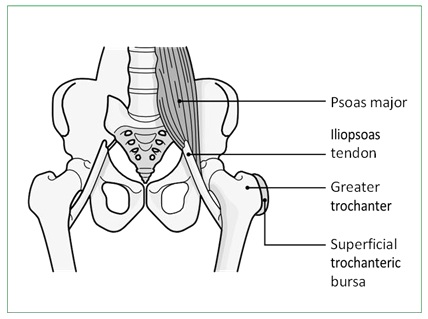 Figure 3. Structures of the lateral hip
Iliopsoas tendonitis
- Iliopsoas tendonitis is inflammation of the iliopsoas tendon that runs over the edge of the pelvis and helps you bend your leg up (see Figure 3).
- This usually gets better on its own.
Snapping iliopsoas tendon
- A snapping iliopsoas tendon doesn't usually cause hip pain.
- 'Snapping' refers to the clicking noise as the tendon flicks over the edge of your pelvis when you move - it doesn't mean the tendon breaks.
- Some people say the sensation feels like their hip is popping out of place. If your Doctor thinks you have this condition, they will usually recommend you rest and use painkillers until it settles.
- Tests and surgery are rarely needed.
Torn acetabular labrum
- The acetabular labrum is a thick ring of cartilage around the hip socket. It can be torn if the ball or socket of the hip are misshapen.
- This can be the result of hip problems in childhood or changes to the shape of the hip as it develops, but in most cases the cause is unknown.
- If the ball of the hip joint is affected, it's called a cam lesion. When the socket is affected, it's known as a pincer lesion.
- We don't yet know whether treating these problems with surgery prevents osteoarthritis in later life.
- If your Doctor thinks you have a torn acetabular labrum, they may recommend you have an arthrogram investigation.
- This is where a small amount of dye is injected into the hip joint before an MRI or CT scan. This gives a clear image of the surface of the bones, soft tissues and cartilage in the joint.
Other causes of groin pain
- Groin pain is very commonly caused by problems with the hip. However, it can also be a symptom of other conditions, such as:
- a hernia - a painful lump, often in the groin, which may need surgery
- lymph nodes in the groin - these usually occur if there's infection in the lower leg
- gynaecological problems can be felt as hip pain.
What treatments are there for hip pain?
- If your hip pain doesn't improve with simple medications such as paracetamol and ibuprofen, and a mixture of rest and gentle exercise, you should see your Doctor for further advice.
- They may recommend the following treatments:
Drugs
- Non-steroidal anti-inflammatory drugs (NSAIDs) like ibuprofen.
- Your Doctor may prescribe NSAIDs that are stronger than ibuprofen, to help ease your pain.
- Like all drugs, NSAIDs can sometimes have side effects.
- If you are taking prescription NSAIDs your Doctor will take precautions to reduce the risk of these - for example, by prescribing the lowest effective dose for the shortest time.
Bisphosphonates
- Bisphosphonates are used to treat Paget's disease and osteoporosis. They work by slowing bone loss, which reduces the risk of hip fractures.
Physiotherapy and occupational therapy
A Physiotherapist may be able to help get your hip moving by showing you a gentle range of movement exercises and activities.
They will work with you to improve your symptoms and help get your hip moving properly again.
Their approach will depend on whether your problem is short-term or a long- standing condition. Almost everyone will benefit from visiting a Physiotherapist, and they can recommend things such as:
- exercises to strengthen weakened muscles, change co-ordination and improve function
- advice on improving your posture
- exercises to ease or prevent stiffness
- exercises to increase the range of joint movement
- putting adhesive tape on the skin to reduce the strain on the tissues, and to help increase your awareness of the position of your hips and back
- manual treatments to the soft tissues and joints - such as massage and manipulation
- how to walk when your hip hurts
- how to use a walking stick or crutch.
It can take a while to get your referral to an NHS Physiotherapist. You could see one quicker if you go privately but you will have to pay for this.
If you think your work or certain activities might be the main cause of your pain, it is worth discussing this with an occupational therapist.
They will be able to give you advice on how to change your movements to help prevent pain continuing or returning.
If your place of work has an occupational health department, they may also be able to help.
You can also see an occupational therapist privately. You will be able to get an appointment quicker, but it will cost you money.
Your GP or hospital consultant can refer you for physiotherapy and occupational therapy, or you may be able to refer yourself.
Steroid injections
- If your pain has been caused by bursitis or inflammation in or around your hip, steroid injections can help.
- They are often given with a local anaesthetic which numbs the area to reduce the pain of the injection. They are usually very helpful in treating conditions affecting the trochanteric area on the outside of the hip.
- Sometimes they are also effective for treating iliopsoas tendonitis - though the injection will need to be given by a radiologist using ultrasound to guide the injection, because the iliopsoas tendon is so deep.
- A snapping iliopsoas tendon can also be treated with steroid injections with the guidance of a type of x-ray, called video fluoroscopy, to make sure it is given in the right place.
- Ultrasound-guided injections are also becoming more popular.
Surgery
- Not everybody with hip pain will need surgery.
- Hip fractures almost always need surgery to stabilise the bone and hold it in place. Replacement of the ball of the hip may also be necessary.
- It is common for older people to experience hip fractures, which can take a long time to fully recover from.
- People can often be in hospital for a couple of weeks or more to get over the fall and the surgery, and many often need extra help at home afterwards.
Hip replacement surgery
- If your hip pain is caused by arthritis and other treatments haven't helped, your Doctor may talk to you about hip replacement.
- The modern techniques used in a hip replacement make the surgery very safe and people usually have extremely good outcomes after it.
- More than 90% of people who have a hip replacement find their pain is greatly reduced.
- A modern artificial hip should last at least 15 years.
- Usually, you'll only need to stay in hospital for a few days after surgery.
- Physiotherapists will help get your hip moving again by showing you simple exercises and ways to do daily activities.
- If you're being considered for hip replacement surgery, it is important you're in good health and try to keep your weight down.
- Your general health will probably be assessed during a hospital appointment before, and your surgeon will also talk to you about the operation.
- You may also meet the Physiotherapists and occupational therapists who'll be involved in your treatment after surgery.
Revision surgery
- If your hip replacement becomes loose, infected or otherwise fails, it's possible to have further surgery to correct it.
- Modern revision surgery techniques are developing quickly and most failed hip replacements can be dealt with.
- You'll be in hospital longer than your first hip replacement, and it might take longer to recover.
Acetabular labrum surgery
- A torn acetabular labrum can often be seen on an MRI scan and might be one of the first signs of arthritis in your hip.
- It is also possible that the torn labrum is also caused by a misshapen hip that you might have been born with.
- The pain caused by a torn acetabular labrum could improve.
- In the short-term with painkillers or NSAIDs, rest, physiotherapy and the use of crutches.
- Surgery to reshape the hip has been tried and can improve the range of movement.
- In some cases, this procedure is performed using keyhole surgery as a hospital day case or you may stay a night in hospital.
- You'll need between one and two months off work. We don't know whether such operations can prevent arthritis developing in your hip.
Exercises for hip pain
- You can improve your hip pain by keeping active and trying to exercise every day.
- These exercises are designed to stretch, strengthen and stabilise the structures of your hip.
- If you're in pain don't overdo it. Taking a painkiller before you start can help.
- Exercise can make your muscles ache a bit afterwards for a short time, and this is nothing to worry about.
- If you have a sudden pain, if your pain gets worse or if it hasn't improved after a couple of days, seek advice.
- Start slowly and gradually build the exercises up over time. Aim to repeat each exercise 5-10 times. Try to do this routine 2-3 times a day - even when your hip feels better.
- Talk to your Doctor or Physiotherapist if you've recently had a hip replacement or have any questions about exercising.
1. Hip flexion (strengthening)
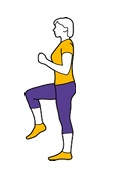
- Hold onto a work surface and march on the spot to bring your knees up towards your chest alternately. Don't bring your thigh above 90 degrees.
2. Hip extension (strengthening)
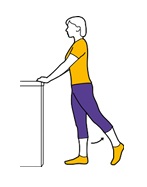
- Move your leg backwards, keeping your knee straight. Clench your buttock tightly and hold for five seconds. Don't lean forwards. Hold onto a chair or work surface for support.
3. Hip abduction (strengthening)
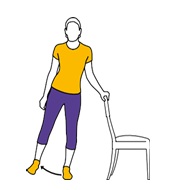
- Lift your leg sideways, being careful not to rotate the leg outwards. Hold for five seconds and bring it back slowly, keeping your body straight throughout. Hold onto a chair or work surface for support.
4. Heel to buttock exercise (strengthening)
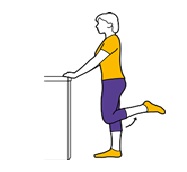
- Bend your knee to pull your heel up towards your bottom.
- Keep your knees in line and your kneecap pointing towards the floor.
5. Mini squat (strengthening):
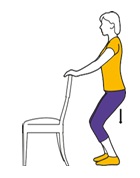
- Squat down until your knees are above your toes. Hold for a count of five if possible.
- Hold on to a work surface for support if you need to.
6. Short arc quadriceps exercise (strengthening):
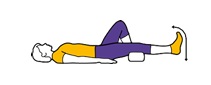
- Roll up a towel and place it under your knee. Keep the back of your thigh on the towel and straighten your knee to raise your foot off the floor. Hold for five seconds and then lower slowly.
7. Quadriceps exercise (strengthening):
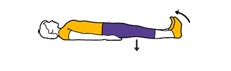
- Pull your toes and ankles towards you, while keeping your leg straight and pushing your knee firmly against the floor. You should feel the tightness in the front of your leg. Hold for five seconds and relax. This exercise can be done from a sitting position as well if you find this more comfortable.
8. Stomach exercise (strengthening/ stabilising):
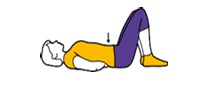
- Lie on your back with your knees bent. Put your hands under the small of your back and pull your belly button down towards the floor. Hold for 20 seconds.
9. Bridging (strengthening/stabilising):
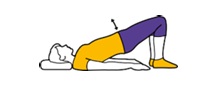
- Lie on your back with your knees bent and feet flat on the floor.
- Lift your pelvis and lower back off the floor. Hold the position for five seconds and then lower down slowly.
10. Knee lift (stretch):
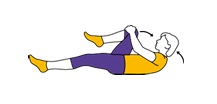
- Lie on your back. Pull each knee to your chest in turn, keeping the other leg straight. Take the movement up to the point you feel a stretch, hold for around 10 seconds and relax.
- Repeat 5-10 times. If this is difficult, try sliding your heel along the floor towards your bottom to begin with, and when this feels comfortable try lifting your knee as above.
11. External hip rotation (stretch):
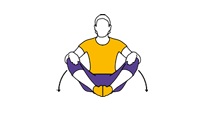
- Sit with your knees bent and feet together. Press your knees down towards the floor using your hands as needed. Alternatively, lie on your back and part your knees, keeping your feet together.
- Take the movement up to the point you feel a stretch, hold for around 10 seconds and relax. Repeat 5-10 times.
Contact our service
MSK CATS and Physiotherapy Services
Tel.: 0207 288 3317
Email: whh-tr.mskinterfaceservice@nhs.net