

Antenatal perineal massage
Information for pregnant women
What is this leaflet is about?
- This leaflet is for pregnant women planning a vaginal birth.
- It explains perineal massage, including its benefits and how and when to do it.
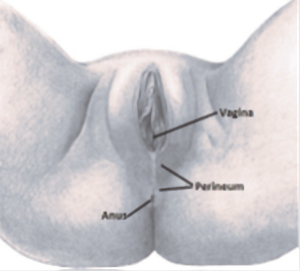
What is the perineum?
- The perineum is the area of skin and muscle between the vagina and the anus.
- It stretches during birth to allow the baby’s head to come out.
- This stretching can sometimes cause tears. Any damage to this area can lead to pain and discomfort after birth.
What is perineal massage?
- About 85% of women have some type of tear or an episiotomy during a vaginal birth.
- An episiotomy is a small cut made by a Doctor or Midwife in the perineum during childbirth.
- Perineal massage means gently massaging the area between the vagina and anus to help it become softer and stretch more easily during birth.
- This may lower the chance of tearing or needing an episiotomy.
- Research shows it can reduce episiotomies by about 16% and tears by about 9%.
- It is recommended by the Royal College of Midwives and the Royal College of Obstetricians.
When should I start massaging?
- You can start from 34 weeks of pregnancy.
- Try to do it 3–4 times a week for about 5–10 minutes each time.
How do I do it correctly?
After a bath or shower, get into a comfortable position, such as:
- Sitting slightly reclined
- Standing with one foot raised (on a toilet, stool, or bath)
- Squatting against a wall
- Choose a quiet place where you will not be disturbed.
Wash your hands.
Use unscented perineal massage oil as lubrication, or alternatively olive oil, coconut oil, evening primrose oil or sunflower oil.
Do not use sweet almond oil if you have a nut allergy.
Do not use baby oil, mineral oil, or petroleum jelly or other petroleum-based products
Place one or both thumbs about 5cm inside the vagina.
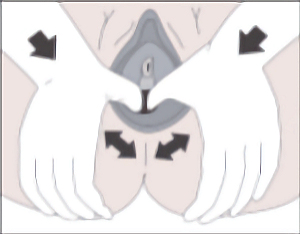
- Gently press down towards the back wall (towards the anus) until you feel a stretch in the muscles around the vagina.
- It should not be painful. This helps you get used to the feeling of stretching during birth.
- Once you feel the gentle downward pressure, move your thumbs slowly from side to side in a “U” shape.
- You can also massage the perineum by using thumbs on the inside and index fingers on the outside.
- Try to relax your pelvic floor muscles while doing this, as it helps the area stretch.
- It may feel tight at first, but it should not be painful and should become easier over time.
- If a partner is helping, they should use their index fingers instead of thumbs, and you can guide them on how much pressure to use.
- Do not do perineal massage if you think your waters have broken or if you have herpes, vaginal thrush, or any other vaginal infection.
- Speak to your Midwife or GP if you think you have any of these conditions.
- To help reduce the risk of tearing and pain during birth, a warm compress may also be used on the perineum while your baby is being born.
- Your Midwife or Doctor will talk to you about this during labour.
Questions?
- If you have any questions on perineal massage, please speak with your Midwife.
This leaflet was adapted with kind permission from Nottingham University Hospitals NHS Trust and Royal Free NHS Trust.
Contact our service
Whittington Bladder and Bowel Care Service
Email: whh-tr.bladderandbowel@nhs.net
Webpage: https://www.whittington.nhs.uk/?c=33288
Whittington Pelvic Health Physiotherapy
Email: whh-tr.outpatienttherapy@nhs.net
Webpage: https://www.whittington.nhs.uk/?c=42977
North central London perinatal pelvic health service - Royal Free London
Email: rf-tr.nclpphs@nhs.net