

Cochlear implants
Patient information factsheet
This leaflet explains what a cochlear implant is, how it works, and who it may help. It will help you understand whether it could be an option for you.
What is a cochlear implant?
- A cochlear implant is an electronic device that can help children and adults who have severe hearing loss.
- It can help you hear sounds and understand speech.
- It works differently from a hearing aid. A hearing aid makes sounds louder.
- If you have severe or profound hearing loss, a hearing aid may not help enough.
- A cochlear implant bypasses the damaged part of your inner ear. It sends sound signals directly to the hearing nerve.
- The hearing nerve carries these signals to your brain, allowing you to hear sounds.
How does hearing work?
The ear has three main parts:
- Outer ear: Collects sound and directs it through the ear canal to the eardrum.
- Middle ear: Contains the eardrum and three small bones (ossicles) that vibrate and pass sound to the inner ear.
- Inner ear: Contains the cochlea, which changes sound vibrations into electrical signals. These signals travel along the hearing nerve to the brain, where they are understood as sound.
What does a cochlear implant look like?
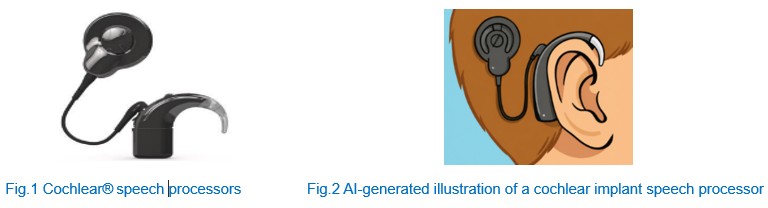
- A cochlear implant has an external sound processor and headpiece, which are worn on the ear or head.
How does a cochlear implant work?
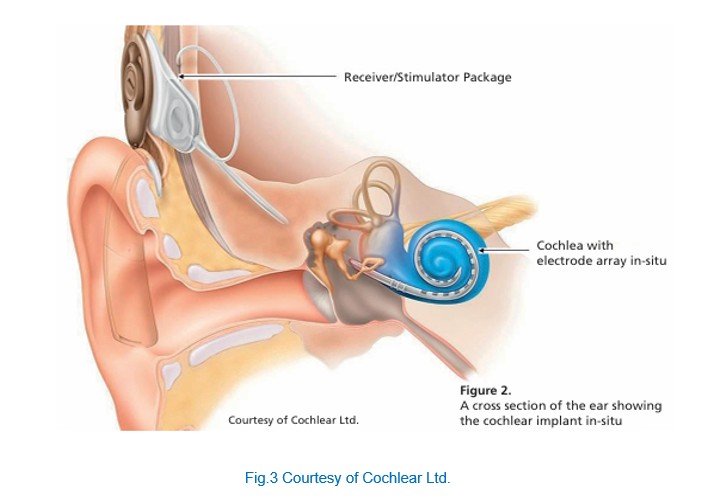
- A cochlear implant system has two parts:
1. External sound processor and headpiece
2. Internal implant and electrode array, which are placed during surgery - The microphones on the external processor pick up sounds and change them into digital signals.
- These signals are sent to the internal implant through the headpiece, which is held in place by a magnet.
- The internal implant sits under the skin and sends signals through the electrode array to the hearing nerve.
- The hearing nerve then carries these signals to the brain, allowing sound to be heard in real time.
Who may be suitable for a cochlear implant?
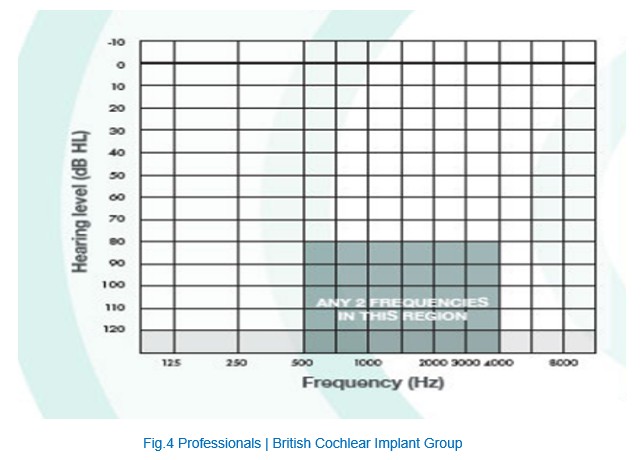
- To be considered for a cochlear implant, you must meet specific criteria, according to NICE (National Institute for Health and Care Excellence), TA566 guidance:
‘Severe to profund hearing loss in both ears: Cohlear implantation is recommended for severe to profound hearing loss in both ears for thresholds equal to or greater than 80 dB HL at any 2 frequencies between 500 and 4000 Hz (see green shaded area). To be considereed for an assessment, candidates need to be optimally aided and not receive adequate benefit from hearing aids. People deafened after bacterial meningitis should be referred as soon as possible. Adults are eligible for unilateral cochlear implantation. Adults who are registered blind and all children are eligible for bilatersl cochlear implantation.’
- Before you are referred to a cochlear implant centre, further assessments will be carried out.
Referral and implant centres
- If you meet the criteria, with your consent (agreement) you will be referred to a cochlear implant centre for further assessment.
- The specialist team will carry out more tests and review your results. This will help them decide if a cochlear implant may be suitable for you.
- They will explain how a cochlear implant works, its possible benefits and risks, and what to expect during the assessment and treatment process.
- You will have time to ask questions and discuss whether a cochlear implant is right for you.
Further information
- If you have any questions or would like more information, please speak to your audiologist or healthcare professional.
Contact our service
Department of Audiological Medicine
St Ann's Hospital
St Ann’s Road, London N15 3TH
E-mail: whh-tr.StAnns-Audiology@nhs.net
Tel: 020 3224 4698 (Monday to Friday 9am to 5pm)